

How Far in Advance Should You Book a Safari and Mozambique Holiday?
By • April 9, 2026
Why Booking Timing Matters More Than Most Travellers Realize
Safari and Mozambique holidays are not high-volume beach vacations.
They depend on small lodges with limited room counts, safari vehicles capped at specific guest numbers, conservation concessions with controlled access, and regional aviation infrastructure that operates on fixed capacity.
When the prime rooms are gone, they are gone.
For long-haul travelers from the USA, Canada, Europe, and Australia, waiting too long does not simply increase cost. It reduces flexibility, narrows structural options, and forces compromise.
The strongest safari and Mozambique itineraries are built from lodge availability outward. If you secure the right safari property first, everything else can be sequenced intelligently around it. If you delay, you often end up building the trip around what remains rather than what is ideal.
Booking timing is not administrative. It is strategic.
Peak Season Demand: Why Early Commitment Matters
Peak safari and Mozambique travel season generally runs from June through October.
Dry inland conditions increase wildlife visibility. Vegetation thins. Animals concentrate near water sources. Coastal humidity moderates. Ocean conditions stabilize. Long-haul travelers gravitate toward this window.
This is also when inventory tightens fastest.
Top Greater Kruger private reserves often see strong forward bookings a year in advance. Botswana delta camps with fewer than a dozen suites can fill peak months twelve months ahead. Island lodges in the Bazaruto Archipelago frequently reach preferred room category capacity nine to ten months out.
For peak season travel in 2026, a planning window of nine to twelve months in advance is ideal. For highly specific lodge requests, premium room categories or multi-country combinations, twelve months or more provides the strongest security.
Waiting four to six months during peak season typically reduces choice significantly. At that point, itinerary structure becomes reactive rather than optimized.
Shoulder Season: More Flexibility, But Not Unlimited
May and November often sit in the shoulder window. Safari visibility remains strong. Coastal conditions are generally stable. Visitor volume drops slightly compared to peak months.
This creates modest availability improvements.
For shoulder season travel, booking six to nine months in advance is usually sufficient for clean routing and good lodge selection. However, the most desirable safari concessions and top beach properties still move quickly. Smaller lodges do not suddenly become high-inventory simply because it is shoulder season.
Travelers who wait too long in shoulder months often discover that while space technically exists, it is not necessarily in the lodge tier or room category originally envisioned.
Shoulder season offers flexibility, but not immunity from demand cycles.
Green Season: Opportunity With Conditions
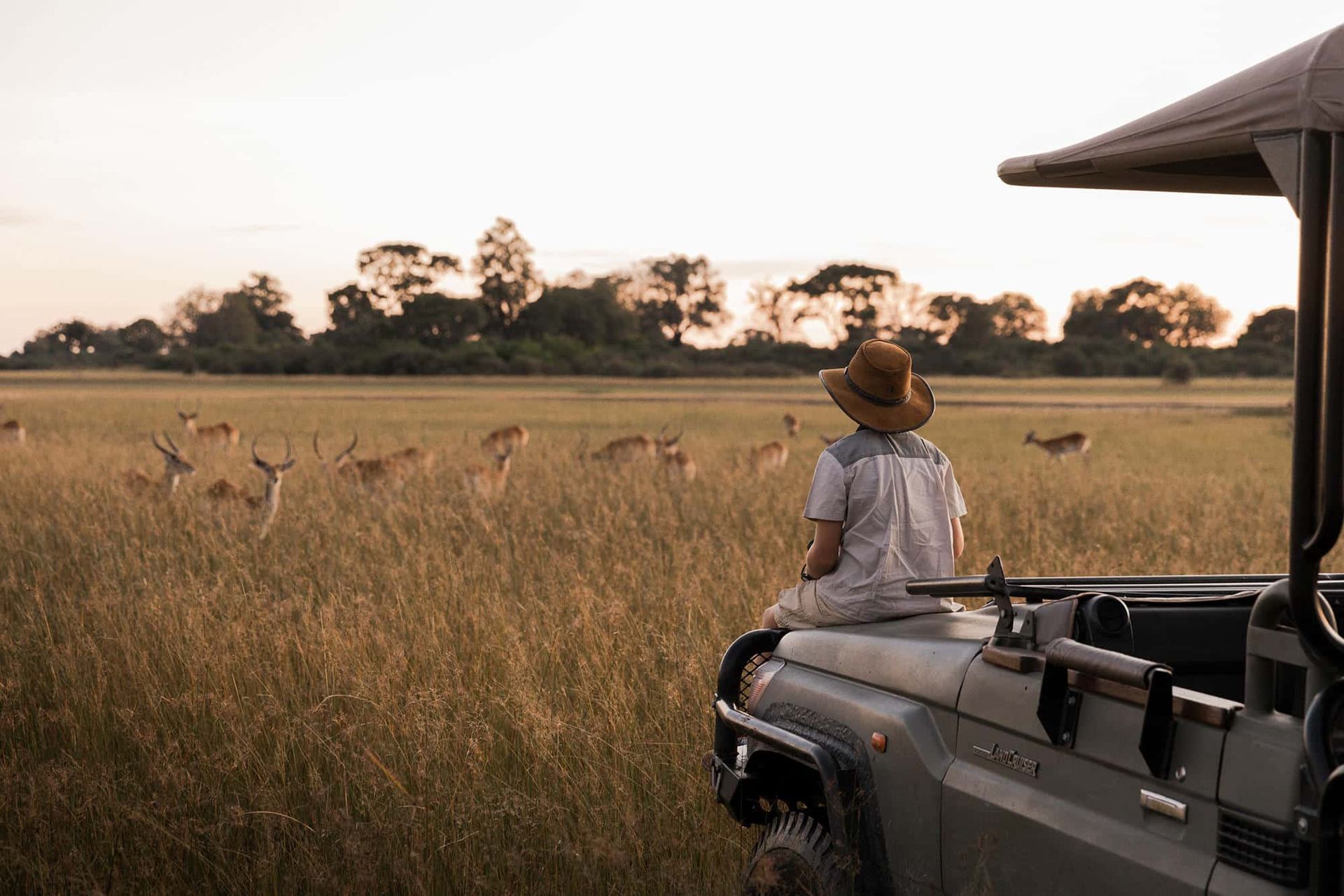
Between January and March, safari landscapes shift. Vegetation is lush. Wildlife disperses more widely. Coastal conditions can become warmer and occasionally wetter.
Availability during this period improves. Last-minute bookings are more realistic. For flexible travelers who prioritize value and do not require specific flagship lodges, green season can offer strong structures even at shorter notice.
However, the green season requires honest expectation alignment. Wildlife viewing is still rewarding, but density may feel less concentrated than in dry months. Marine conditions vary.
Last-minute safari and Mozambique combinations work best during this window, but they remain unpredictable for milestone travel such as honeymoons or major anniversaries.
How Far in Advance for 7, 10, and 14 Night Structures
Duration influences booking urgency.
For a 7-night safari and Mozambique holiday during peak season, six to nine months in advance may suffice if routing is simple and lodge expectations are flexible. However, for highly sought-after safari reserves, nine months or more remains safer.
For a 10-night structure, particularly with premium safari lodges and island beach properties, nine to twelve months in advance is strongly recommended. The added safari night increases competition for specific properties.
For 14-night multi-country itineraries that include Botswana, Victoria Falls, or Zambia, twelve months ahead is ideal. Complex routing requires early coordination of light aircraft schedules, lodge inventories, and regional flights.
The longer and more layered the itinerary, the earlier the planning window should begin.
Botswana Combinations Require the Longest Lead Times
Botswana safari camps often operate with fewer than twelve rooms. Some concessions host even fewer guests at any given time.
Add light aircraft coordination to that structure, and availability narrows rapidly.
For peak season Botswana and Mozambique combinations in 2026, a twelve-month planning window is strongly recommended. Eleven months may still work, but flexibility becomes necessary. At nine months, prime delta camps may already be full for high-demand weeks.
Short-notice Botswana bookings are possible, but lodge tier selection becomes constrained. The difference between a good Botswana camp and a flagship one often lies in the planning timeline.
Kruger and Mozambique: More Inventory, Still High Demand
Greater Kruger offers a broader inventory compared to Botswana. Multiple private reserves provide choice across tiers.
However, the most sought-after lodges still fill early in peak season. Suites with river views, family villas, and private-use units often secure early commitments.
For a 10-night Kruger and Mozambique structure in peak months, nine to twelve months in advance remains the ideal window. Shoulder season may allow slightly shorter lead times, but premium categories rarely remain wide open at short notice.
Kruger is easier to secure than Botswana. It is not unlimited.
Flight Coordination: The Overlooked Variable
International long-haul flights from North America, Europe, and Australia generally open around eleven months in advance. Premium cabin availability often moves quickly for peak safari months.
Regional African flights and light aircraft transfers layer on top of confirmed lodge space. If safari availability is secured early, flight coordination becomes smooth and efficient.
Late lodge booking often forces mismatched arrival times, unnecessary overnight stops in Johannesburg, and compromised connection windows.
Strong safari and Mozambique itineraries are built from confirmed lodge inventory outward. Flights align around certainty, not speculation.
What Actually Happens When Travellers Wait Too Long
Delaying booking does not usually eliminate the possibility of travel.
It alters the structure.
You may lose the preferred safari lodge and need to change reserves. You may need to swap island beach plans for mainland alternatives. You may accept suboptimal flight times that increase transit fatigue.
Instead of designing the best possible journey, you begin adjusting around constraints.
In compressed booking windows, itineraries become shaped by what is available rather than what is ideal. The difference may appear subtle on paper, but it is felt in pacing and property alignment.
Early booking protects intention.
Does Booking Early Save Money?
Early booking primarily protects availability, not necessarily price.
Peak season safari rates are often fixed annually. They do not typically decrease closer to departure. However, waiting may eliminate mid-tier options and force upgrades into higher-priced categories.
In some cases, late booking creates inefficiencies in routing that increase overall trip cost. Additional internal flights, overnight stays, and transfer adjustments compound quickly.
Booking early is less about securing discounts and more about preventing structural compromise that inflates cost indirectly.
Is There a “Too Early” Point to Book?
Beyond twelve to fourteen months, most safari lodges have not yet released detailed seasonal rates. Booking too early can be premature if pricing has not been confirmed.
The optimal planning window for 2026 travel is generally between nine and twelve months before departure for peak season, and six to nine months for shoulder travel.
That window balances rate certainty with inventory protection.
Secure Your Safari and Mozambique Dates With Mozambique Travel
Safari and Mozambique holidays depend on small, high-quality properties operating with limited inventory. The strongest itineraries are built around confirmed lodge space, then layered with flights and transfers intelligently.
Mozambique Travel has structured cross-border safari and beach journeys for more than 20 years. We monitor availability cycles, understand peak demand patterns, and secure inland and coastal inventory before aligning aviation logistics.
If you are planning a 2026 safari and Mozambique holiday from the USA, Canada, Europe, or Australia, begin discussions nine to twelve months ahead for peak season travel. Early planning protects lodge choice, routing integrity, and overall experience quality.
Featured Packages
Frequently Asked Questions
How far in advance should you book a safari and Mozambique holiday for peak season travel?
For peak season travel between June and October, travellers should book a safari and Mozambique holiday at least nine to twelve months in advance. This timeframe ensures access to the best safari lodges, preferred room categories and efficient flight routing. High-demand properties in Greater Kruger, Botswana and the Bazaruto Archipelago often fill early. Booking ahead protects itinerary structure, reduces compromise and allows travellers to secure the strongest possible safari and beach combination.
When is the best time to book a safari and Mozambique holiday for 2026?
The best time to book a safari and Mozambique holiday for 2026 depends on the intended travel season and itinerary complexity. For peak months, booking nine to twelve months ahead offers the best availability and routing flexibility. For shoulder season travel, six to nine months is typically sufficient. Early planning ensures access to top safari reserves, island lodges and coordinated flights, allowing travellers to build a well-paced and balanced safari and beach journey.
Can you book a safari and Mozambique holiday last minute and still get good availability?
Last-minute bookings for a safari and Mozambique holiday are possible, but they work best during the green season from January to March. During this period, lodge availability improves and more flexible travel structures become possible. However, travellers may need to compromise on specific safari lodges, room categories or beach locations. For peak season or milestone trips such as honeymoons, booking in advance remains the most reliable way to secure the best experience.
Why do safari and Mozambique holidays need to be booked so far in advance?
Safari and Mozambique holidays require early booking because they depend on small, high-quality lodges operating with limited capacity. Safari vehicles, conservation concessions and island properties restrict guest numbers to maintain experience quality. In addition, regional flights and transfers run on fixed schedules with limited seats. These combined constraints mean availability tightens quickly, making early booking essential to secure preferred lodges and build a well-structured safari and beach itinerary.
How does booking early improve a safari and Mozambique holiday itinerary?
Booking early improves a safari and Mozambique holiday by allowing travellers to secure the most suitable safari lodges first, which forms the foundation of the entire itinerary. Once key properties are confirmed, flights and transfers can be aligned efficiently. This creates smoother travel flow, better pacing and stronger destination combinations. Early booking also increases access to premium room categories, ensuring the overall experience matches the traveller’s expectations without compromise.
What happens if you wait too long to book a safari and Mozambique holiday?
Waiting too long to book a safari and Mozambique holiday does not prevent travel, but it often changes the structure of the trip. Travellers may lose access to preferred safari lodges and need to adjust destinations or downgrade accommodation. Flight options may become less efficient, increasing travel time and complexity. As a result, the itinerary becomes reactive rather than carefully designed, which can affect both comfort and the overall quality of the safari and beach experience.
SHARE THIS POST
Are You Ready FOr Mozambique?
Page through our packages and find the offer right for you!
Ready to Speak to a Mozambique Travel Expert?
Get In Touch and Ask for a Call-Back Today
Latest Posts

Mainland Coastal Sanctuaries in Vilanculos: Why Mozawi Signals a New Direction for Mozambique Travel