

African Wild Dogs in Mozambique: Painted Wolves, Conservation Success, and Ongoing Threats


By Mozambique Travel May 20, 2026

What Are African Wild Dogs, Painted Wolves, and Lycaon pictus

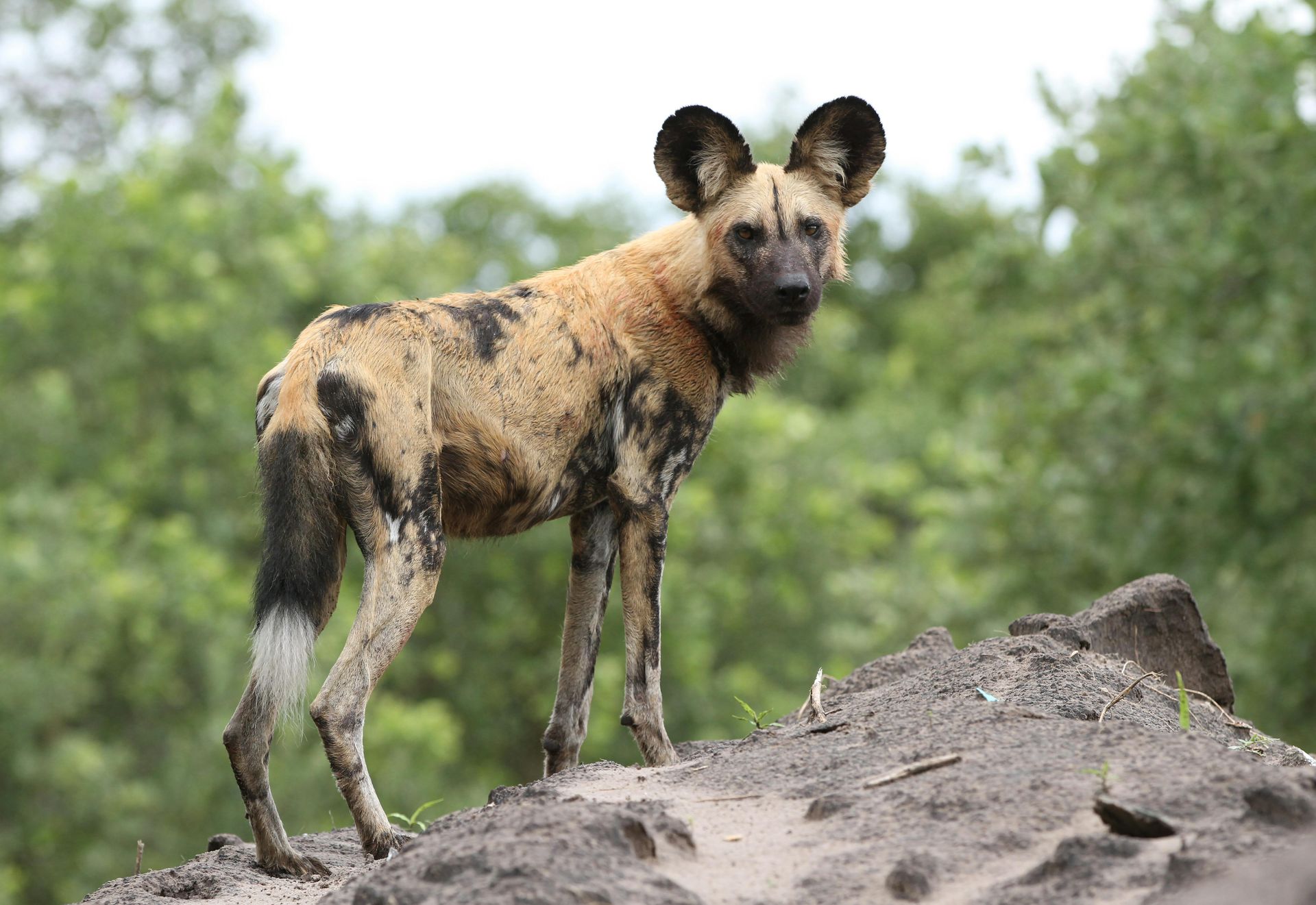
African wild dogs, also known as painted wolves or painted dogs, are one of Africa’s most distinctive and endangered predators. Scientifically known as Lycaon pictus, meaning “painted wolf,” these animals are instantly recognisable by their irregular coat patterns, large, rounded ears, and highly social behaviour.

Unlike lions or leopards, African wild dogs rely entirely on cooperation. They hunt in coordinated packs, communicate constantly, and share food with injured or young members. Their hunting success rate is among the highest of any large predator, yet they are also one of the most vulnerable.

Painted wolves require vast landscapes, low human pressure, and stable prey populations. These requirements have made them particularly susceptible to habitat loss, disease, and conflict with people across Africa, including Mozambique.


Are There African Wild Dogs in Mozambique Today

Yes, African wild dogs still occur in Mozambique, but their distribution is fragmented and uneven. Historically, wild dogs ranged widely across the country. By the late twentieth century, they had disappeared from many areas due to hunting, habitat loss, and disease.

Today, Mozambique’s wild dog presence is concentrated in a few key regions, supported by conservation initiatives and remaining wilderness. The most significant populations and projects are associated with Gorongosa National Park and northern landscapes linked to the Selous–Niassa ecosystem.

Mozambique’s role is increasingly important because it sits at the intersection of southern and eastern African wild dog ranges, offering potential connectivity if conservation succeeds.

African wild dog in a leafy forest, facing the camera with alert ears and dark mottled fur

Where to See Wild Dogs in Mozambique

Wild dog sightings in Mozambique are never guaranteed, even in stronghold areas. This unpredictability reflects their wide-ranging nature rather than rarity alone.

Gorongosa National Park has become internationally known for its painted wolf reintroduction project, which restored wild dogs to the park after more than two decades of absence. Sightings occur, but they remain occasional and seasonal.

Northern Mozambique, particularly the broader Niassa landscape, has historically supported wild dogs as part of a transboundary ecosystem connected to southern Tanzania. However, recent instability has affected monitoring and tourism access, complicating conservation visibility.

Unlike more commercial safari destinations, Mozambique prioritises ecological restoration over guaranteed sightings. This makes encounters more meaningful but less predictable.


Gorongosa’s Painted Wolves and What Reintroduction Achieved

The reintroduction of painted wolves to Gorongosa National Park marked a major milestone for carnivore conservation in Mozambique. After being locally extinct for more than 25 years, a founding pack was released in 2018 following extensive ecological preparation.

The project demonstrated that with sufficient prey recovery, reduced human pressure, and strong monitoring, wild dogs can re-establish in landscapes where they were previously lost. Early results showed successful hunting, denning, and pup survival.

More importantly, Gorongosa’s painted wolves became a symbol of ecosystem recovery. Their return signalled that the park’s restoration had reached a level capable of supporting apex predators again.

Two wet wild dogs sniffing the muddy ground in a grassy outdoor area

Niassa and the Selous–Niassa Wild Dog Landscape

Northern Mozambique forms part of the vast Selous–Niassa ecosystem, one of the largest remaining connected wilderness areas in Africa. Historically, this region supported wide-ranging populations of African wild dogs.

Niassa National Reserve has long been recognised as an important habitat for painted wolves due to its size, prey base, and low human density. The connectivity with southern Tanzania offers genetic flow that is critical for long-term survival.

However, security challenges and reduced conservation capacity in recent years have placed pressure on wildlife, including wild dogs. This underscores how political and social stability directly influence conservation outcomes.


Why African Wild Dogs Are Disappearing Across Africa

African wild dogs are endangered across their entire range, not because of a single factor, but due to a combination of pressures that compound each other.

Their need for large territories brings them into frequent contact with human land use. Roads, farms, and settlements fragment habitat and increase mortality. Unlike more adaptable predators, wild dogs struggle to persist in small or isolated reserves.

Across Africa, populations are now scattered and often disconnected, increasing the risk of local extinctions.

Dry woodland with fallen tree, orange ground, and two small piles of debris in the foreground

Human–Wildlife Conflict and Community Challenges

Conflict with people is one of the most significant threats facing wild dogs in Mozambique and elsewhere. Painted wolves are often blamed for livestock losses, even when other predators are responsible.

Retaliatory killing, poisoning, and persecution remain serious risks, particularly near community lands. Because wild dogs hunt cooperatively and travel widely, a single conflict event can affect an entire pack.

Successful conservation increasingly depends on community engagement, livestock protection strategies, and education that reduces fear and misinformation.


Snaring, Bushmeat Poaching, and Indirect Threats

Snaring is one of the most lethal threats to African wild dogs. Snares are typically set for antelope and other prey species, but wild dogs are frequently caught and injured or killed.

Even when dogs escape snares, injuries can reduce hunting ability and pack survival. Bushmeat poaching also depletes prey populations, forcing wild dogs to travel further and increasing conflict risk.

These indirect pressures are difficult to detect and require sustained anti-poaching efforts.

African wild dog staring forward in a blurred green setting

Disease and the Domestic Dog Interface

Disease poses a unique risk to African wild dogs because of their social structure. Rabies and canine distemper, transmitted from domestic dogs, can wipe out entire packs.

In Mozambique, wild dogs living near communities face higher exposure due to unvaccinated domestic dogs. Disease outbreaks have caused sudden population crashes in several African regions.

Vaccination programmes and buffer strategies are now considered essential components of wild dog conservation.


Competition With Other Predators

Wild dogs coexist with lions and hyenas, but competition is intense. Lions often kill wild dogs, while hyenas frequently steal kills.

This pressure influences where wild dogs den, hunt, and move. In reintroduction contexts such as Gorongosa, understanding predator dynamics is crucial to improving survival outcomes.

Wild dogs are highly adaptable, but only when landscapes are large enough to allow avoidance behaviour.

Spotted hyena walking across muddy ground in a green forest clearing

Why Wild Dogs Need Space, Corridors, and Connectivity

African wild dogs require some of the largest home ranges of any African carnivore. Packs can cover hundreds of square kilometres, particularly in prey-poor environments.

Habitat fragmentation isolates packs and limits genetic diversity. Conservation success increasingly depends on wildlife corridors and transboundary cooperation.

Mozambique’s position within regional conservation landscapes makes it strategically important for maintaining connectivity between southern and eastern African populations.


Conservation Success Stories and Reasons for Hope

Despite their challenges, African wild dogs have shown resilience when given space and protection. Reintroductions, corridor protection, and community engagement have stabilised or increased populations in several African regions.

Mozambique’s painted wolves represent both vulnerability and opportunity. Gorongosa’s success demonstrates what is possible when ecosystems are restored holistically.

With continued investment, improved security, and regional cooperation, Mozambique could play a key role in the species’ long-term survival.

African wild dogs standing together outdoors, with one in sharp focus and others blurred behind

The Future of African Wild Dogs in Mozambique

The future of wild dogs in Mozambique depends on integrated conservation. This includes protected areas, community partnerships, disease management, and transboundary planning.

Painted wolves will never be common or easily seen. Their survival depends on landscapes that prioritise ecological function over short-term gains.

Mozambique’s wild dogs are not just a conservation story. They are a test of whether large-scale restoration and coexistence can succeed in a changing Africa.


What Responsible Travellers Should Know

Travellers interested in African wild dogs should approach sightings ethically. Supporting parks and lodges that invest in conservation, respect viewing distances, and contribute to research makes a tangible difference.

Wild dogs should never be chased or pressured for sightings. Their value lies not in frequency, but in what their presence represents.

Responsible tourism supports the long-term protection of painted wolves and the landscapes they depend on.

Featured Packages


Frequently asked questions about african wild dogs

  • Are African wild dogs still found in Mozambique?

    African wild dogs are still found in Mozambique, but in fragmented and carefully monitored populations. The most well-known presence is linked to Gorongosa National Park through reintroduction efforts, while northern Mozambique forms part of a wider transboundary landscape connected to southern Tanzania. Wild dogs remain rare, wide ranging, and dependent on large, protected ecosystems.

  • Where is the best place to see painted wolves in Mozambique?

    The best known location for painted wolves in Mozambique is Gorongosa National Park, where a successful reintroduction restored wild dogs after decades of absence. Sightings are possible but never guaranteed. Northern landscapes linked to the Niassa ecosystem also support wild dogs, although tourism access and monitoring there are more limited and variable.

  • Why are African wild dogs endangered in Mozambique and Africa?

    African wild dogs are endangered due to habitat loss, fragmentation, disease, snaring, and conflict with people. Their need for vast territories brings them into frequent contact with livestock and settlements. Rabies and canine distemper from domestic dogs pose severe risks, while poaching and prey depletion further reduce pack survival across much of Africa.

  • What threats do wild dogs face specifically in Mozambique?

    In Mozambique, wild dogs face threats from snaring, bushmeat poaching, disease transmission from domestic dogs, and conflict near community lands. In northern regions, insecurity has disrupted conservation operations. Habitat fragmentation and reduced connectivity between protected areas also limit genetic flow, increasing the risk of local population collapse without sustained conservation intervention.

  • How successful was the wild dog reintroduction in Gorongosa?

    The wild dog reintroduction in Gorongosa is considered a conservation success because it demonstrated that restored ecosystems can support complex predators again. Released packs established territories, hunted successfully, and produced pups. While long term outcomes require continued monitoring, the project proved that painted wolves can return when prey, space, and protection align.

  • Can tourism help protect African wild dogs in Mozambique?

    Responsible tourism can support wild dog conservation by funding protected areas, research, and community engagement. Ethical tourism avoids pressuring animals for sightings and supports lodges and parks invested in conservation. While tourism alone cannot save wild dogs, it plays a meaningful role when combined with habitat protection, disease management, and local partnerships.

SHARE THIS POST

Are You Ready FOr Mozambique?

Page through our packages and find the offer right for you!


Ready to Speak to a Mozambique Travel Expert?

Get In Touch and Ask for a Call-Back Today

Latest Posts

Aerial view of a white sandbar curving through green-blue water near a small sandy island
By Mozambique Travel May 18, 2026
Benguerra Island accommodation explained in depth. Learn why Benguerra offers the best places to stay in Mozambique’s Bazaruto Archipelago.
Person sitting by a turquoise spring watching goats in a rocky desert landscape
April 27, 2026
Sabi Sands and Bazaruto explained for 2026. Discover how this safari and beach pairing balances wildlife intensity with island recovery for a seamless holiday.
Aerial view of a tropical beach with turquoise water, white sand, and a speedboat leaving a wake.
April 21, 2026
Find the right African island for your travel style. Compare Mozambique, Bazaruto, and Benguerra to match energy, access, and experience with confidence.
Resort pool with blue lounge chairs, palm trees, and a clear blue sky on a sunny day
April 20, 2026
Discover the best luxury lodges in Mozambique for 2026. Explore top island and beachfront resorts offering privacy, space, and refined Indian Ocean experiences.
Four people smiling and posing on a sunny beach with turquoise water and a blue sky
April 20, 2026
Plan the best Mozambique family holidays in 2026. Discover safe beaches, family-friendly resorts, top destinations, and activities for all ages.
Small motorboat on turquoise water under a bright blue sky with clouds, near a sandy shoreline
April 20, 2026
Discover mainland coastal sanctuaries in Vilanculos. Learn how Mozawi reflects a new, low-density travel style focused on space, nature, and authentic experiences.
Show More