

Sky islands and unseen biodiversity in 5 remote mountain rainforests of Mozambique


By Mozambique Travel August 12, 2025

Mozambique Rainforest in Mozambique Shock the Scientific World 

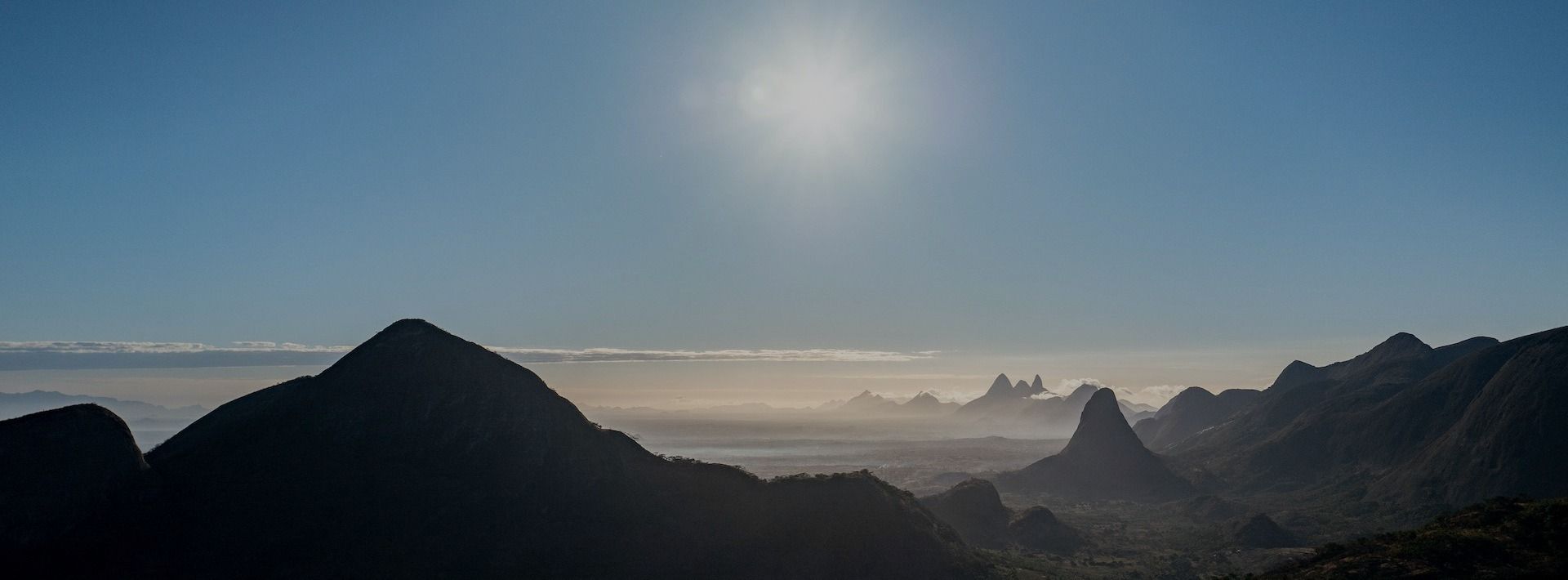
Mozambique continues to astound scientists and tourists who find fresh treasures every time they journey to this mostly unexplored country. For here biodiversity hotspots and hidden riches reveal more about the environment, culture and history of a unique African destination. Discover the undiscovered in Mozambique, the Sky Islands of Africa. These five remote sky island mountains reveal incredible biodiversity, untouched Mozambique rainforest, and numerous new species to science, supporting pristine mountain rainforests never seen before.


Seasoned travelers know that the tropical beaches and islands of Mozambique are exquisite vacation destinations, but few know about the fantastical Sky Islands further north. These form part of the newly discovered and documented Africa Sky Islands. Who would have thought that northern Mozambique boasts unique isolated mountains called inselbergs near the famous Mount Mulanje in Malawi, extending out in a chain of independent peaks toward the coast? These rich Sky Islands are just that—true islands in the sky, hot houses of astonishing biodiversity and intact ecosystems that fascinate scientists. They also offer intrepid travelers thrilling opportunities for eco-tourism, adventure hiking, birding, and conservation-focused expeditions into some of the most untouched rainforests in Mozambique.

Aerial view of dense green forest with a rocky hill under a hazy sky

One huge discovery links these Sky Island inselbergs to the Eastern Arc Mountains (EAM), a chain of mountains in Kenya and Tanzania also intricately linked to the East African Coastal Forests (EACF) that grow along the Indian Ocean coast from southern Somalia in the north, through coastal Kenya and Tanzania to the mouth of the Limpopo River in southern Mozambique!  Now the solitary, yet connected, Mozambique peaks have joined the elite global cluster of recognized Sky Islands recently classified as ‘isolated mountain forests containing rich biodiversity and single-site endemic species.’ 


Most of these identified inselbergs and hidden Mozambique rainforests have yet to be properly explored and documented. They are rare and part of some special Mozambique untouched forest and the sky islands of Africa. So, their biodiversity treasures could reveal much more wealth than was ever thought possible. This means that conservation protection for the Sky Islands is crucial! Intensifying human land-use impacts in Mozambique go hand-in-hand with escalating human encroachment on natural resources, habitats and their supported species. Growing human populations suffer enormous economic and social issues and thus increasingly depend on natural resources for their survival. Sustainable community conservation methods are key to the protection of biodiversity hotspots such as these Sky Islands. 


In this blog, we will zoom in on five exquisite Mozambique Sky Islands as we join top global scientists on a mission to discover the undiscovered. The Earth continues to amaze and stun mortal humans and new biodiversity communities sustain life in a continual cycle of survival. We will get a bird’s eye view of Mount Gorongosa, Mount Mabu, Mount Lico, Mount Ribáuè and Mount Namuli. 


What are Sky Islands and their Mozambique Rainforest specialties?

Sky Islands are remote stand-alone mountains or inselbergs surrounded by profoundly unrelated low-lying environments. The word inselberg is something inspiring and worth noting: insel is German for ‘island’ and berg is German for ‘mountain’. These isolated topographical structures rise alone on well-developed plains like islands rising from the sea of green vegetation. They usually have steep rock cliff sides and seem unapproachable from below, like castles or fortresses in nature, protecting their homes within. 


The first Sky Islands were those found on the Mexican Plateau and the Chiricahua Mountains in southeastern Arizona, USA, in 1943, which a writer called ‘monuments in the mountain’. Today, many more Sky Islands have been noted and documented with awe worldwide, the freshest of these in Mozambique, a veritable Sky Island region. 


Secluded forests on mountains are exceptionally rare and incredible in terms of their pristine moist vegetation and endemic species. Sky Islands are known for their altitudinal migration (when animals move a short distance from high to low altitudes from season to season) and relict populations (ancient species that were once quite common but are now rare, for example, the Coelacanth fish). 


Africa sky Islands form part of that branch of geography called biogeography that analyzes the scattering of fauna and flora over time and place in relation to how the physical environment affects their changing locations. And these islands refer specifically to some untouched and unique Mozambique Rainforest. Sky Islands are usually far distances from each other and surrounded by desert or grassland habitats. Many species retreat into Sky Islands when the surrounding landscapes heat up and change and they are then stranded there. Islands in the ocean are also isolated zones for species which took refuge here as the earth was changing such as the famous Galapagos Islands of Ecuador. 


Let’s look at the isolated rainforests in Mozambique that have shocked the scientific world due to their high levels of endemism and biodiversity. 


Current Sky Islands News in Mozambique (2025)

The year 2025 has brought exciting developments for Mozambique’s Sky Islands. Scientists are now recognizing these mountains as part of a larger South East Africa Montane Archipelago, a new ecoregion that stretches across northern Mozambique and into southern Malawi. This recognition highlights the global importance of these isolated rainforests, where hundreds of previously unknown plant and animal species have recently been documented.


Mount Namuli continues to attract attention with new community-driven conservation programs that are helping protect its rare wildlife while also securing land rights and development opportunities for local people. Conservationists are working hand-in-hand with villages to safeguard habitats for creatures like the pygmy chameleon and unique forest mammals.


In addition, Mozambique has expanded its network of protected areas, with recent designations on the coast reinforcing the country’s commitment to nature protection from the mountains to the ocean. Together, these initiatives are positioning Mozambique as a leader in biodiversity conservation and offering fresh opportunities for eco-travel experiences.


Mount Gorongosa one of Africa Sky Islands

A year after Mount Gorongosa was incorporated into the national park to protect its unique species, an award-winning documentary filmed the extraordinary biodiversity on this Sky Island and its high levels of endemism. “Discovering Mount Gorongosa,” (2012) tells the story of the Mount Gorongosa rainforests, water sources, rare and endemic species, how they all got here and what they depend on to survive. 


Mount Gorongosa is a dramatic inselberg in central Mozambique’s Sofala Province, its highest peak of three peaks, Gogogo, reaches 1,863 m, created by Karoo Volcanism. This happened an estimated 183 million years ago when the supercontinent, Gondwana, broke up during the Lower Jurassic epoch, a time when unique geological formations occurred, new dinosaurs appeared, and marine reptiles were evolving. 


The ancient Mount Gorongosa stands all alone in a sea of natural wilderness and is cooler and wetter than the surrounding lowlands with constant rainfall and misty conditions – the perfect habitat for unique plants and animals. It’s an extension of the eastern Zimbabwe mountain forest-grassland mosaic ecoregion along the Mozambique-Zimbabwe border. It was heavily deforested during the Mozambique civil war, but is now making a solid recovery as a Mozambique rainforest of immense importance and value. Gorongosa National Park is deeply committed to the restoration of Mount Gorongosa and at the same time supporting the community that depends on it.

Lush green tropical forest with a winding river and misty mountains in the distance

Mount Gorongosa is also a vital resource for indigenous communities who have always lived there, who know the forests and appreciate their rich biodiversity. So much has changed since 1920 when Gorongosa was first set aside as a private 1 000 square km hunting reserve. There were no such things as fences or exclusion for the local people around Gorongosa National Park long before the park was even a dream. 


Then the colonial explorers and Portuguese arrived to map Africa’s biodiversity, trade and settle. The naturalists perceived that biodiversity was separate from the indigenous people and that the land should be fenced off and preserved for the wildlife alone. In 1960, Gorongosa National Park was proclaimed and enlarged to 5300 square km, an elite safari destination for Hollywood actors to chill and game view. But local people were denied entry. 


The Mozambican civil war played out inside Gorongosa National Park, trashing every ecosystem. Wildlife species were annihilated and about 1 million people died in the mayhem, thousands of them traumatized for years afterwards. The decision years later to include local people in the management and ownership of the Gorongosa biodiversity riches is now bearing fruit. Several sustainable agricultural projects in and alongside the forests benefit people and nature – the coffee program, cashew nuts, honey, and tree planting. This is ecotourism at its best.


Africa Sky Islands Mount Lico and a Mozambique Rainforest

Mount Lico is the site of an old-growth Mozambique rainforest on an inselberg mountain in the Alto Molocue District of Zambezia Province in northern Mozambique. Finding an old-growth Mozambique rainforest deserves celebration and secrecy because such a rare habitat is also a virgin forest or a primary forest. The trees have been able to mature to a healthy height and age thanks to the lack of human interference. It’s a primeval forest where special groups of plants and animals reveal unique environmental characteristics that can be called climax communities. They have reached a good age safely hidden away in an undiscovered habitat in an untouched food web that still functions holistically as nature intended on Mount Lico. This is one of the most spectacular and isolated Africa Sky Islands.

Sunlit mountain ridges above a sea of clouds under a clear blue sky

Mount Lico is especially unusual in that it rises some 1,100 m above sea level, most of which is 700 m of sheer rock walls impenetrable by people. The small 30-ha forest paradise grows inside a volcanic crater! It is therefore miraculous that the famous scientist, Dr Julian Bayliss, discovered this Sky Island in 2012, not long after he found Mount Mabu only 70 km away. He used Google Earth to search for significant landforms and vegetation features, and then he tapped into satellites, drones, camera tracking and remote sensing technologies, mapping these wonders of nature and sometimes physically going to experience them. A perfect piece of Mozambique untouched forest at Mount Lico.


Bayliss planned his mission to Mount Lico in detail and invited a team of scientists and top rock climbers to scale the 700 m cliffs to enter the forest within. They studied the mind-blowing habitat and questioned the locals about the site – who said that no one had ever been into the mountain forest. How strange then that the team found some old broken pots at the source of a stream and deduced that a medicine man had probably been there to offer gifts to the spirits in return for keeping the water flowing to the settlements down below. But how had he arrived at this point? Bayliss was delighted to find a new butterfly species, a new frog, freshwater crab and other tiny mammals and reptiles never seen before on Mount Lico.


Mount Mabua a pristine Mozambique Forest

Dr Bayliss initially discovered Mount Mabu quite by chance in 2008 using satellite imagery on Google Earth and in 2009 the Mozambican government secured its environmental protection against possible commercial logging – with the help of the Royal Botanic Gardens Kew, the Mulanje Mountain Conservation Trust (MMCT), and several other groups. Such intact Sky Island biodiversity in southern Africa is of utmost importance to science, conservation and human livelihoods. 


Bayliss was thrilled to find four new endemic butterflies, bush vipers, birds and eight new chameleon species, all of which depend on unique plants and ecosystems for their survival. The Mount Mabu mid-altitude Mozambique rainforest is the largest unbroken 8 000-ha stretch of such rare habitat growing some 950-1400 m high.

Rocky hillside with dark cliff tops, tan rock layers, green shrubs, and clouds overhead

Expeditions on the ground secure the vital knowledge that Google Earth throws up on a screen and speed up the protection of the species as real and connected in nature. The forest stands as a beacon of hope, unharmed in a landscape that was decimated by civil war – and now, as more people return to the area, the forest is increasingly threatened by human needs for firewood, food, crop planting and livestock. 


Mount Mabu is a treasure chest of biodiversity and unique fauna and flora endemic to this one site! The Royal Botanic Gardens, Kew, BirdLife International, and other conservation organizations shared their research findings about this prime unbroken 8,000 ha mid-altitude moist forest:

  • 3 new species of snake 
  • 2 new species of chameleon and a new species of pygmy chameleon 
  • 4 new species of butterfly and 4 new subspecies 
  • 2 new species of vascular plants 
  • 7 globally threatened bird species including the 2nd only population of the Namuli Apalis 
  • The long-tailed pouched rat 
  • A new species of horseshoe bat and a possible new species of wooly bat.   


The Nangaze, Nvava, and Limbue communities live around this Sky Island which plays a central role in their daily lives. They believe in the power of the universe and that Mount Mabu is part of intricate natural relationships between the mountains and the rivers. When the first leaders of the Nvava or the Nangaze community died their spirits flew to the mountain and to this day, the communities believe that they belong to Mount Mabu. They still rely on the mountain for protection, traditional ceremonies, animal protein, subsistence farming, and scavenging for food. 


Their indigenous knowledge and cosmology need to be documented, learned and respected as immense contributions to natural resource conservation and sustainable utilization. To this end, a community-based conservation management plan aims to strengthen community involvement in conserving the last Afromontane forests using nature-based tourism and rehabilitating the tea estates that were planted there in the 1930s. 


During the civil war, people lost their jobs in the tea plantations and were forced to use natural resources for their survival such as slash-and-burn agriculture involving the clearing of natural woodlands to plant crops. The forest is a vital water source and natural sponge, slowing down the water to the lower slopes for distribution into other ecosystems and human areas.


Mount Ribáuè a perfect example of an Africa Sky Island

Mount Ribáuè comprises two rare granite inselbergs, naturally divided by a narrow three kilometre wide valley. The second peak, Mount M’pàluwé, rises from a low lying landscape of mostly dry miombo woodland and bushveld. Located in northern Mozambique’s Nampula Province, not far from Mount Namuli, this one of a kind Sky Island is home to endemic species never seen anywhere else before, all striving to survive in a changing world.

Lone rocky hill rising from a lush green forest under a partly cloudy blue sky

Mount Ribáuè is the first ever proclaimed Tropical Important Plant Area in Mozambique and is linked to a string of granitic inselbergs and mountains crossing the two northern provinces. As human crops expand at the foot of the mountain, they threaten intact rainforests and key species. Two non profit organizations have been working in the region since 2019 to encourage subsistence farmers to use sustainable methods that avoid impacting the Ribáuè Massif forests.


Mount Ribáuè, also known as Monte Ribáuè, consists of two granite inselbergs separated by a narrow valley approximately three kilometers wide. The massif’s streams supply nearby villages and support dry season gardens that are essential to household food security.


Human settlements and intense crop cultivation on the lower slopes of Mount Ribáuè are leading to forest clearing higher up for potatoes and other cool climate crops. At the current rate, the forest could vanish within a decade if unmanaged. Slash and burn agriculture and hunting remain major threats to the intact state of the Ribáuè mountains’ biodiversity, making local partnerships and alternative incomes essential.


Mount Namuli – Sky Island Mozambique

The fifth Sky Island in this series is the magnificent 2,420 meter Mount Namuli, the second highest peak in Mozambique in northern Zambezia Province. It is a fascinating geological structure with a 700 metre high flat plateau followed by a granite dome that rises another 1,600 metres skyward, covering a vast 150 square kilometers. Mount Namuli is only 160 kilometers from Malawi’s spectacular Mount Mulanje massif, with which it shares several endemic species and a deep cultural history.


The rainforests of Mount Namuli are an important biodiversity hotspot for threatened animals and plants and it is a sacred Sky Island in Mozambique. A 1969 forest survey shows that the forests have barely changed in the past half century, remaining largely undiscovered by humans. The mountain is a haven for about 155 rare bird species, including the Namuli apalis, and some 42 mammals such as Vincent’s bush squirrel. Also recorded were 13 new reptiles and amphibians, including a new pygmy chameleon and a forest viper. Remarkably, 126 butterflies were catalogued, seven of them new to science.

Lush green valley below a towering rocky mountain under a partly cloudy sky

Mount Namuli is an Important Plant Area, an Important Bird Area and an Alliance for Zero Extinction Site as recognized in the year 2007 when two international scientific expeditions revealed mind-blowing biodiversity on this special Sky Island thanks to a grant by the UK Government Darwin Initiative. It is also a level one Priority Key Biodiversity Area according to the Critical Ecosystem Partnership Fund. These biologists and conservationists found an extraordinary 420 plant species growing higher than 1000–1300 m altitude, with 5 of these new to science! 


Thankfully a new initiative to protect Mount Namuli from further exploitation has been developing at the grassroots since 2018.  Nitidæ is a non-profit association aiming to design, develop and lead projects that preserve the environment while contributing to the local economy. They have a strong partnership with Legado aiming to collectively support Namuli’s Lomwe communities in securing a thriving future for Namuli and the people who depend on it. 


Their combined vision is to strengthen agricultural livelihoods across current and future farming methods and entrepreneurial projects, at the same time increasing long-term protection for the Mount Namuli ecosystem by making it one of Mozambique’s first Community Conservation Areas. 


The Road Less Travelled in Mozambique

Kevin Record and Mozambique Travel have been planning and supporting remote expeditions and voyages of discovery throughout Mozambique for over 25 years. This began in 1994 on a year long trans Africa journey, then deepened into discovering and falling in love with a country still untouched and rising from the ashes of civil war. It developed into a passion for sharing Mozambique and bringing tourists to this beautiful country in ways that respect nature and culture.


As the founder of Mozambique Travel, Kevin has been integral to the company’s success and personally involved in sharing contacts and experience to support many types of expeditions over the years, including source to sea safaris following Livingstone’s route up the Zambezi by dhow, finding Mary Moffatt’s grave at an isolated abandoned Catholic mission station, trans Quirimba kayak expeditions, film location sourcing, film permits and crew support including Gem Hunter in 2013 for the double blue aquamarine episode, paddling the Lugenda from source to the Rovuma and then to sea, a Mozambique whole coast sea kayak expedition, diving, spearfishing, and fishing Banco St Lazarus, sailing dhows from Zanzibar to Mozambique, and numerous other off the beaten track feats for clients including journeys into the incredible Niassa Reserve and beyond.

  • Source-to-sea safaris following Livingstone’s route up the Zambezi by dhow
  • Finding Mary Moffatt’s grave at an isolated abandoned Catholic mission station
  • Trans Quirimba kayak expeditions
  • Film location sourcing, film permits and crew support including GemHunter in 2013 for the double blue aquamarine episode.
  • Paddling the Lugenda from source to the Rovuma and then to sea
  • Mozambique whole coast sea kayak expedition
  • Diving, spearfishing and fishing Banco St Lazarus
  • Sailing dhows from Zanzibar to Mozambique 
  • Numerous other off the beaten track feats for clients including the incredible Niassa Reserve and beyond. 


Why Choose Kevin Record for your off the beaten track Mozambique Expeditions

When it comes to planning and executing complex adventures across Mozambique, Kevin Record stands apart. With more than two decades of hands-on experience, he has guided, supported, and supervised expeditions in some of the country’s most remote and challenging regions. His extensive knowledge of routes, logistics, local communities, and conservation areas ensures every journey is safe, seamless, and deeply rewarding. From kayaking the Quirimbas to sailing the Zambezi, Kevin provides unparalleled expertise and on-the-ground problem-solving. Trust Kevin Record to make your Mozambique expedition extraordinary—unique, reliable, and unforgettable from start to finish.


Get in touch with Kevin personally for any unique travel or expedition requirements you have for daring adventures into the less explored parts of Mozambique and how to find the Sky Islands. 

Featured Packages


Frequently asked questions about benguerra island accomodation

  • What are the Mozambique Sky Islands?

    The Mozambique Sky Islands are isolated granite and quartzite mountains, also known as inselbergs, rising dramatically from the northern lowlands. These peaks host untouched rainforests at higher altitudes, creating unique ecosystems separated from the surrounding landscapes. Scientists call them “islands in the sky” because their biodiversity is completely distinct from the lowlands. Many species of plants, reptiles, amphibians, and insects have been found here that occur nowhere else on Earth, making the Sky Islands some of Africa’s most important biodiversity hotspots.

  • Where are the Mozambique Sky Islands located?

    The Sky Islands are found in northern Mozambique, stretching from the border with Malawi and extending east toward the coast. The most famous peaks include Mount Lico, Mount Namuli, Mount Mecula, Mount Chiperone, and Mount Mabu. Each mountain stands apart like a green fortress of rainforest and granite, rising above the plains. These isolated locations are difficult to reach, which has helped preserve their ecosystems. Their remoteness makes them both scientifically invaluable and exciting destinations for adventurous travelers.

  • Why are the Mozambique Sky Islands important for biodiversity?

    The Sky Islands protect some of the last intact Mozambique rainforests, providing refuge for species that cannot survive in the hotter, drier lowlands. Scientists have discovered new species of butterflies, frogs, snakes, and plants on these peaks, as well as rare birds like the green-headed oriole. Because each Sky Island is separated by distance and altitude, they act as natural laboratories of evolution, allowing species to adapt independently. This makes the region a hotspot for scientific research and global conservation efforts.

  • Can travelers visit the Mozambique Sky Islands?

    Yes, adventurous travelers can visit some of the Sky Islands, but access is limited and requires preparation. Mount Namuli and Mount Mabu are the most accessible for hiking and trekking. Visitors usually need local guides, permits, and proper logistical planning as the terrain is rugged and facilities are minimal. Travelers who do make the journey are rewarded with rare wildlife sightings, cultural encounters with remote mountain communities, and breathtaking panoramic views across northern Mozambique.

  • How do the Mozambique Sky Islands compare to other African destinations?

    Unlike popular safari parks or beach resorts, the Sky Islands remain one of Africa’s last frontiers. They offer a rare combination of untouched rainforest, scientific discovery, and authentic adventure. While Mount Mulanje in Malawi is better known, Mozambique’s Sky Islands are less explored, meaning visitors experience a true sense of discovery. They complement traditional Mozambique holidays—safaris in Gorongosa or island escapes in the Bazaruto Archipelago—by adding a unique inland adventure focused on conservation and biodiversity.

SHARE THIS POST

Are You Ready FOr Mozambique?

Page through our packages and find the offer right for you!


Ready to Speak to a Mozambique Travel Expert?

Get In Touch and Ask for a Call-Back Today

Latest Posts

By Mozambique Travel August 5, 2026
Choosing Between Benguerra and Bazaruto for a Mozambique Honeymoon One of the most common questions we receive from honeymoon couples is surprisingly simple: should we stay on Benguerra Island or Bazaruto Island? At first glance, the decision appears straightforward. Both islands sit within the Bazaruto Archipelago . Both offer beautiful beaches, warm Indian Ocean waters, marine adventures and access from Vilanculos. Both are associated with luxury travel and feature heavily in photographs used to market Mozambique around the world. The reality is more nuanced. For most honeymoon couples, the choice between Benguerra and Bazaruto will have a bigger impact on the overall holiday experience than the choice of lodge itself. The atmosphere, scale, privacy levels, activities and style of travel differ significantly between the two islands. After helping travellers plan Mozambique honeymoons for more than 20 years, one pattern is clear. Many couples begin by focusing on accommodation before deciding what type of honeymoon they actually want. That often leads them towards the wrong island. A couple seeking complete privacy and a castaway atmosphere may find Benguerra exactly matches their expectations. A couple wanting more varied landscapes, longer beaches and a broader sense of exploration may prefer Bazaruto. Neither option is automatically better. The right answer depends on what kind of honeymoon experience matters most to you. For most luxury honeymoon travellers, our recommendation is usually Benguerra Island. The combination of intimate lodges, exceptional service, marine experiences and romantic atmosphere makes it easier to justify for couples celebrating a special occasion. However, that does not mean Benguerra is always the correct choice. One of the biggest misconceptions about Mozambique honeymoons is that the most exclusive island automatically delivers the best experience. In practice, the best honeymoon is usually the one that aligns most closely with your expectations, travel style and budget. Before comparing lodges, transfers or activities, it is worth understanding how these two islands differ. What Makes Benguerra Island So Popular With Honeymoon Couples? Benguerra Island has become synonymous with luxury honeymoons in Mozambique . Located just offshore from Vilanculos, it combines beautiful natural scenery with some of the country’s most sought-after accommodation. The island feels intimate, uncrowded and deliberately removed from everyday life. Many couples arrive expecting relaxation and leave remembering the sense of space and exclusivity more than anything else. One reason Benguerra performs so well for honeymoons is scale. The island is large enough to offer diverse scenery yet small enough to maintain a feeling of seclusion. Couples can spend days exploring beaches, enjoying dhow cruises, horse riding along the shoreline, snorkelling coral reefs or simply relaxing without ever feeling surrounded by other visitors. In our experience, honeymoon travellers often underestimate how valuable privacy becomes during a beach holiday. Resorts elsewhere in the Indian Ocean can deliver luxury accommodation but still feel busy. Benguerra tends to provide a stronger sense of escape. This is particularly true at properties such as Azura Benguerra and &Beyond Benguerra Island, where villa spacing and personalised service create a highly private atmosphere. Another major advantage is the marine environment. The waters surrounding Benguerra offer exceptional snorkelling, diving and fishing opportunities. Seasonal whale sightings, dolphin encounters and dugong habitat add further appeal. For couples who want their honeymoon to include memorable experiences rather than simply beach time, Benguerra often delivers more variety than expected. There is also a practical consideration. Many travellers compare Mozambique directly with destinations such as Mauritius, the Seychelles or the Maldives. While those destinations may offer larger resort infrastructure, Benguerra frequently wins when couples prioritise authenticity, privacy and a stronger sense of discovery. Mozambique is not necessarily the easiest Indian Ocean destination. For many honeymoon couples, that is precisely the attraction.
Sunset beach with palm trees and two people walking along the shoreline
By Mozambique Travel August 3, 2026
Discover Mozambique honeymoon destinations, from Benguerra and Vilanculos to tailored safari and beach escapes.

Two people on a small boat with a canopy, floating on clear water under a bright blue sky.
By Mozambique Travel July 29, 2026
Discover the best Mozambique diving holidays, where to stay, when to go and how to choose the right diving destination.
Aerial view of three small green islands in deep blue ocean with turquoise shallows
By Mozambique Travel July 27, 2026
Discover the best islands in Mozambique and learn which island destination is right for your budget, travel style and holiday goals.
Aerial view of beachfront thatched cottages with palm trees and sandy paths near turquoise water.
By Mozambique Travel July 24, 2026
Discover the best beach resorts in Mozambique, from luxury island lodges to mainland retreats, with expert advice on choosing the right stay.
Hands holding a banknote in front of a scenic bay with limestone cliffs and calm water
By Mozambique Travel July 22, 2026
Discover realistic Mozambique holiday costs for 2027, including honeymoon budgets, family holidays, luxury island escapes and safari and beach combinations.
Show More